
Why Change Management?
Why is Change Management?
The way change is managed directly influences what matters most to an organization—its people, customers, and bottom line. As the pace and complexity of change continue to increase, the importance of effective change management grows as well. At its core, change management prepares, equips, and supports employees so they can engage with change, adopt new ways of working, and use them successfully.
Improving project outcomes
Project management and change management play complementary roles in successful change initiatives. While project management addresses the technical aspects of change, change management focuses on the people impacted by it. When organizations apply a best-practice change management approach alongside project management—such as during the implementation of a new accounting platform—the likelihood of meeting project objectives increases dramatically. In fact, Prosci research, based on more than 25 years of global practitioner data, shows that organizations are up to seven times more likely to achieve their project goals.
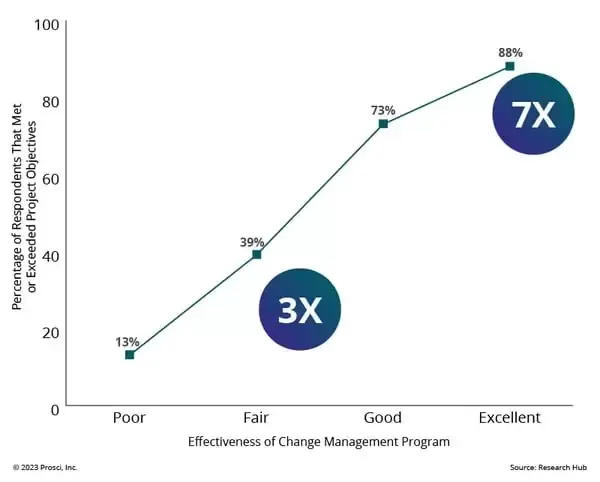
Change Management Impact on Your Organization
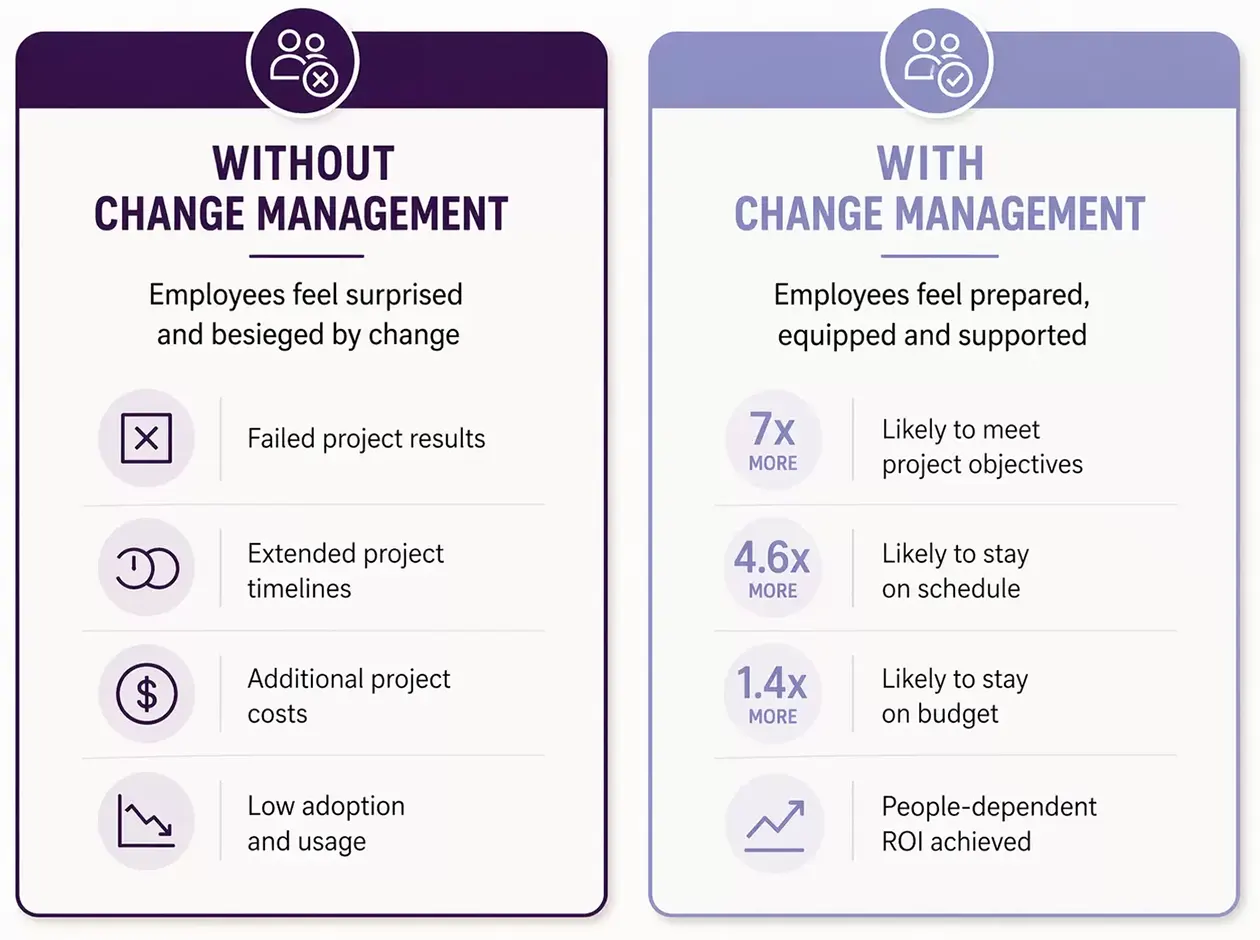

Applying the principles of change management before, during and after a project can go a long way in helping you achieve the desired returns on your project investments.
Building change capability
Organizations can strengthen their ability to handle ongoing and future change by building overall change capability—often referred to as enterprise change management.
Enterprise change management is the systematic application of change management skills, tools, and processes across the organization. This capability can be developed by formally training key roles, embedding change practices into everyday work, and partnering with experienced experts to build internal capability over time.
Change Management Process
Built on more than 25 years of research, the Prosci Methodology—including its models, tools, and processes—represents a proven best-practice approach to managing change. Two of its core components are the Prosci ADKAR® Model and the Prosci 3-Phase Process. Both are grounded in a fundamental principle:<
A framework for individual change
So how do organizations enable individual change that drives broader organizational change? The answer lies in using a structured approach. The ADKAR® Model guides individuals through each stage of a change, helping ensure they understand, embrace, and ultimately adopt new ways of working.
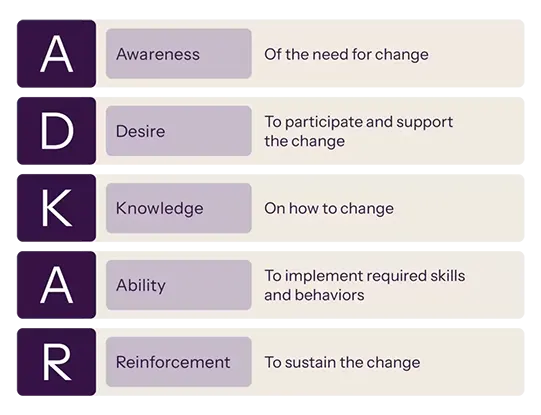
Practitioners, change sponsors, people managers, and other stakeholders all play a role in this process. By working together to apply the ADKAR® Model, organizations support employees in building Awareness of why change is happening, which encourages Desire to participate. They then provide the Knowledge and Ability needed to adopt new ways of working, along with Reinforcement to ensure the change is sustained over time.
A framework for organizational change
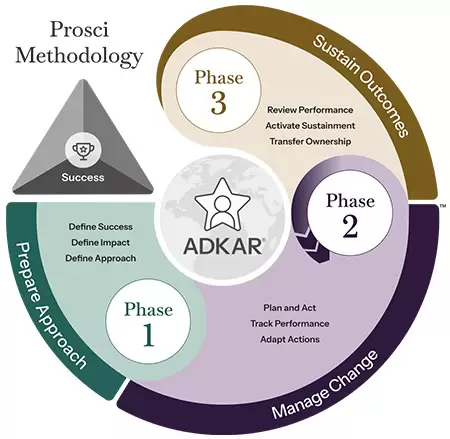
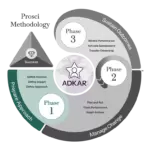
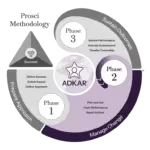
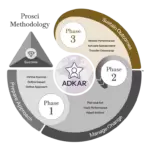
While the ADKAR® Model supports successful change at the individual level, the Prosci 3-Phase Process provides a structured framework for achieving change across the organization. This flexible approach guides practitioners through the key steps and activities required for project and initiative success. Within the 3-Phase Process, practitioners apply core elements of the Prosci Methodology—including the ADKAR® Model and the PCT Model—to effectively manage both the people and organizational dimensions of change.
Here’s the basic structure of the Prosci 3-Phase Process and the goals of each phase:
Now that you have a foundational understanding of what change management is, why it matters, and how a proven approach is applied, a range of additional resources is available to help you deepen your knowledge. These resources can further support you and your organization in building change capability and achieving successful outcomes.